Category: Book Review

  • The Gene: An Intimate History by Siddhartha Mukherjee

    Mukherjee is a gifted writer, apart from being a real doctor. This fluent understanding of the subject matter combined with a superb story-telling ability has enabled him to write a book that’s almost un-put-downable, despite being so technical and potentially dry. 

    It’s a chronological story of the discovery of genes, genetics to gene-therapies, interwoven with some of the author’s personal family history. Like any good story teller, the author zooms in to human details in each anecdote he narrates, even ones about something as mundane as a scientific conference. Some of his personal commentary and insights are sprinkled gently throughout the narrative, enough to give it a personal touch, but not so much as to make it an opinion piece. 

    I always find the history of a science compelling, even necessary for me to appreciate the science itself, and this book fulfilled that in spades for me. 
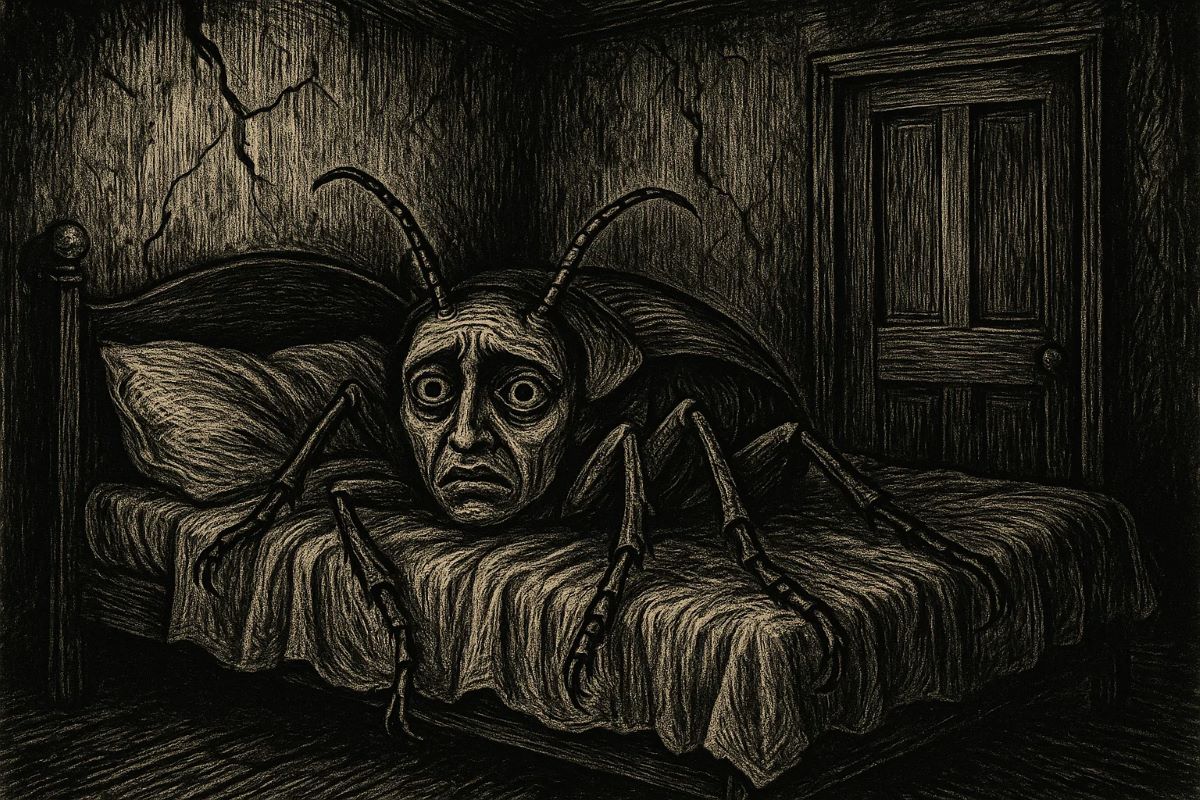
  • Franz Kafka’s ‘The Metamorphosis’

    Franz Kafka’s ‘The Metamorphosis’

    It has taken me two readings, and some help from AI, to start understanding the depth of this novella. When I first read this story in February 2013, I wrote : 

    Maybe it’s the translation, but I found this much touted novel to fall well short of awesome that I was expecting it to be. I get the metaphor, I liked the story telling and I was even surprised that someone who finds roaches so thoroughly disgusting could feel sympathy for one (albeit a human one). I guess that a big part of the respect for this novella is because of the metaphor, but I found it a bit too weakly developed to be that impactful. 

    Once again in June 2025, I read through this as a straight narrative. In the back of my head I was conscious of the allegory, but I didn’t truly appreciate it. At times I did think to myself, ‘I am rooting for this insect, I am mad at his family, I want to yell at them for siding with the “three serious men” who they brought in as lodgers, though this whole thing is just absurd’. Head smack! That’s the greatness of this piece, you dummy! 

    And then I had AI spell it out to me. Ah! The isolation, alienation and dehumanization of individuals, the coldness of society, the transactional nature of relationships – I see. I finally get it now. And the understated language and mundane details with which Kafka manages to paint a vivid picture of this grotesque, absurd narrative is masterful indeed. 

  • The Tipping Point by Malcolm Gladwell

    The author has hit upon one idea, that social phenomena may spread like viruses, small infections at first and a sudden epidemic when a certain “tipping point” is reached. Well, it is just a theory. Without bothering to do any original studies, he quotes various other studies and material (which is all quite interesting information, btw), he goes on to build a pseudo-scientific theory. It’s pop sociology, good for entertainment, and not much more. As a book, it gets repetitive and disjointed after a while. I guess, he just wrote several New Yorker articles and bunched them together into a book.

  • River out of Eden : Richard Dawkins

    This was my first Dawkins (I discovered this book 8 years ago, read half of it and forgot about it. I dug it up again last week and read it through). What a shame – I have spent all these years in ignorance 🙁

    Very educational, very entertaining and extremely readable.

    This is really 5 essays on evolution in the form of a book. To be sure Dawkins builds on the ideas developed in the first chapter in the later ones, but still each can stand on its own.

    The first chapter lays down the basics about the nature of DNA and it’s propagation (DNA’s digital nature, how heredity works, etc.)

    The second discusses the “out of Africa” theories of human evolution. The discussion of the Mitochondrial Eve is fabulous.

    The third chapter’s purpose “is to destroy the argument that complicated contrivances have to be perfect if they are to work at all” – a favorite position of creationists. Brilliantly argued. Case closed!

    The fourth chapter is the best: “God’s Utility Function” – what’s the “designer” of life (on Earth) maximizing? It can’t be the “greatest good for the greatest number” – clearly there are lifeforms hurting other lifeforms for the purpose of simply existing. Or is he trying to maximize David Attenborough’s TV ratings?! More serious questions like, “it makes no economic sense in many species for the sex ratio to be 50%, when a majority of males simply consume resources and have no role to play in reproduction. why have they not been selected out?” Read the book to get the answers 🙂 It’s worth it.

    To me, the last chapter is the least best; I admit I rushed through it a bit. Dawkins tries to come up with a generalized recipe for the evolution of intelligent life on any given planet – in terms of the thresholds that need to be crossed to achieve that. It’s a little hard to follow. May be I’ll re-read it soon.